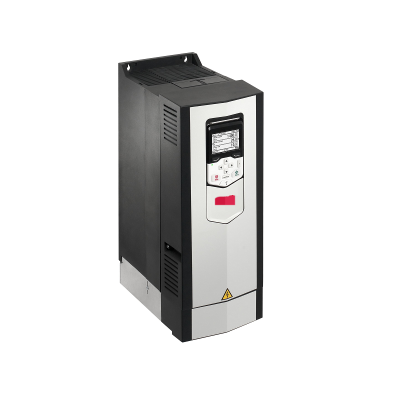
ABB ACS880-31-040A-5 Variable Frequency Drive 22 kW
ABB ACS880-31-040A-5 Variable Frequency Drive 22 kW
ABB ACS880-31-040A-5 Variable Frequency Drive 22 kW
- Detail
- Parameters
ACS880-31-040A-5 serves demanding industrial equipment with ABB direct torque control and a low-harmonic drive architecture rated for 22 kW no-overload use. On 3-phase AC 380–500 V, the catalog lists 40 A maximum continuous output and 22 kW for no-overload use. Light-overload duty is 38 A at 22 kW, while heavy-duty selection is 34 A at 18.5 kW. The R6 frame and IP21 protection establish the published mechanical baseline. Before ordering ACS880-31-040A-5, compare output current rather than kilowatts alone, confirm the exact supply voltage, and obtain a network review when harmonic limits are contractual. Ask for a commercial offer based on the final configuration because options, approvals, logistics, and support can change price materially. When engineered around the real process and electrical system, this drive can become the composed power-quality partner behind a demanding rolling mill table. Imagine a steel process requiring rapid reversals and controlled deceleration. Motors, switching devices, controls, and instrumentation all depend on the same electrical ecosystem. A drive that manages its input current thoughtfully can help the design team pursue cleaner network behavior. ACS880-31-040A-5 enters that conversation like a decisive mill pulpit operator: technically composed, attentive to the supply, and ready to translate a difficult load profile into controlled motor torque. This perspective matters for a rolling mill table. The ACS880-31 is identified in the source catalog as a low-harmonic drive with an IGBT rectifier. That architecture can simplify a power-quality strategy, but the final result still depends on source impedance, transformer data, background distortion, loading, cabling, and other nonlinear equipment. Harmonic performance should therefore be verified against the actual project and applicable standard instead of inferred from a generic slogan. ABB direct torque control supports responsive motor operation, while the active supply stage addresses the line side of the installation. Those capabilities create useful engineering options, not permission to skip system design. For this project, attention should center on reversal frequency, cooling, and network capacity. Motor nameplate data, acceleration time, peak torque, overload duration, stopping method, speed range, process interlocks, and emergency behavior belong in the same selection discussion. Installation details can decide whether a capable drive becomes a dependable system. Verify prospective short-circuit current, upstream protection, earthing, cable routing, motor insulation, EMC requirements, ventilation, ambient temperature, altitude, and available wall space. Review the transformer, generator compatibility where relevant, neighboring loads, capacitor banks, protection coordination, and the plant power-quality study before fixing the final configuration. From the viewpoint of a metals automation engineer, the model code is only the start. Required fieldbus, I/O, safety functions, filters, line equipment, documentation, certificates, local language, commissioning scope, and spare strategy should appear in the quotation. Long motor cables or sensitive bearings may call for additional output-side measures after an application review. IP21 suits protected indoor conditions defined by the project; it should not be treated as weatherproof. Google-friendly product content should answer buyer questions honestly. This page therefore distinguishes no-overload, light-overload, and heavy-duty ratings, explains a realistic use case, and avoids promising a universal harmonic number without defined measurement