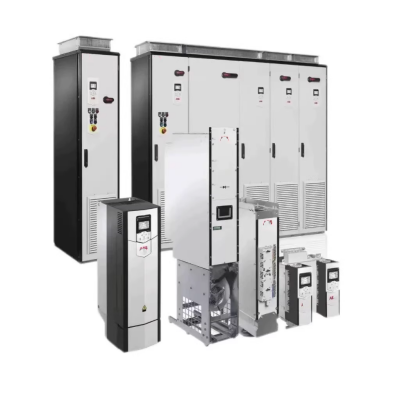
ABB ACS880-11-077A-5 Variable Frequency Drive 45 kW
ABB ACS880-11-077A-5 Variable Frequency Drive 45 kW
ABB ACS880-11-077A-5 Variable Frequency Drive 45 kW
- Detail
- Parameters
ACS880-11-077A-5 is designed for engineers who need more than one-way motor control: it combines an IGBT rectifier with a wall-mounted ACS880-11 drive rated at 45 kW. The source table assigns ACS880-11-077A-5 a 77 A continuous current and 45 kW no-overload motor rating. For lighter overload demands it shows 73 A and 45 kW; tougher duty reduces the applicable values to 65 A and 37 kW. Supply compatibility is 3-phase AC 380–500 V, 50/60 Hz, with frame R6 and IP21 protection. The ACS880-11 uses an IGBT supply stage and ABB direct torque control. Those technologies create engineering possibilities, not permission to skip system design. For this project, attention should center on positioning accuracy, load variation, and uptime. The motor nameplate, mechanical inertia, maximum speed, torque direction, stopping time, overload duration, and emergency behavior belong in the same selection discussion. Installation details can decide whether a good drive becomes a reliable system. Verify prospective short-circuit current, upstream protection, earthing, cable routing, motor insulation, EMC requirements, ventilation, ambient temperature, altitude, and available wall space. Regenerated power also needs somewhere to go. The supply network, other connected loads, transformer, and protection scheme must be reviewed so reverse power flow does not create an unpleasant surprise. From the viewpoint of a intralogistics planner, the model code is only the start. Required fieldbus, I/O, safety functions, filters, line equipment, documentation, certificates, local language, commissioning scope, and spare strategy should appear in the quotation. Long motor cables or sensitive bearings may call for additional output-side measures after an application review. IP21 suits protected indoor conditions defined by the project; it should not be treated as weatherproof. Google-friendly product content should answer buyer questions honestly. This page therefore distinguishes no-overload, light-overload, and heavy-duty ratings, explains a realistic use case, and avoids claiming guaranteed energy savings. It also avoids repeating the model name in every sentence. Search visibility is useful only when the visitor receives accurate context and can make a better technical decision. Before ordering ACS880-11-077A-5, compare current rather than kilowatts alone, confirm the exact supply voltage, and document whether the load will motor, regenerate, or alternate between both. Ask for a commercial offer based on the final configuration because options, approvals, logistics, and support can change price materially. When engineered around the real motion profile, this drive can become the composed energy manager behind a demanding high-bay elevator. Imagine a manufacturing store moving pallets between tall rack levels. In that environment, the motor does not spend its entire life consuming energy. During part of the cycle, mechanics can drive the motor, turning it into a generator. The practical objective is to reuse lowering energy across continuous logistics cycles. ACS880-11-077A-5 approaches that moment like a organized warehouse foreman: attentive to direction, deliberate about transitions, and unwilling to treat every deceleration as unwanted heat. This perspective matters for a high-bay elevator. A conventional braking resistor may still be appropriate in some designs, but a regenerative architecture offers another route when cycles are frequent and returned energy can be accepted